FAQ
Here are the answers to the most frequently asked questions. If you can't find what you're looking for, don't hesitate to contact us!
CATEGORIES


-
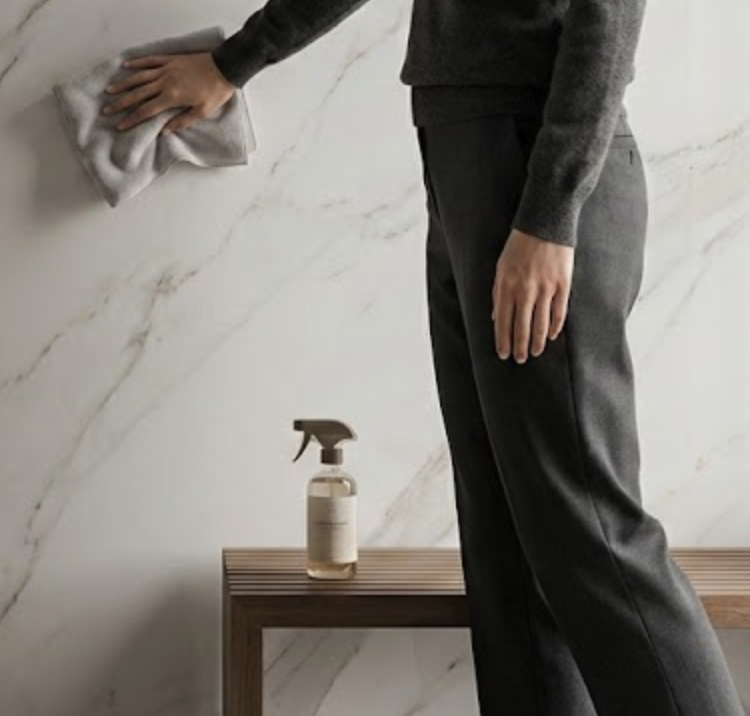
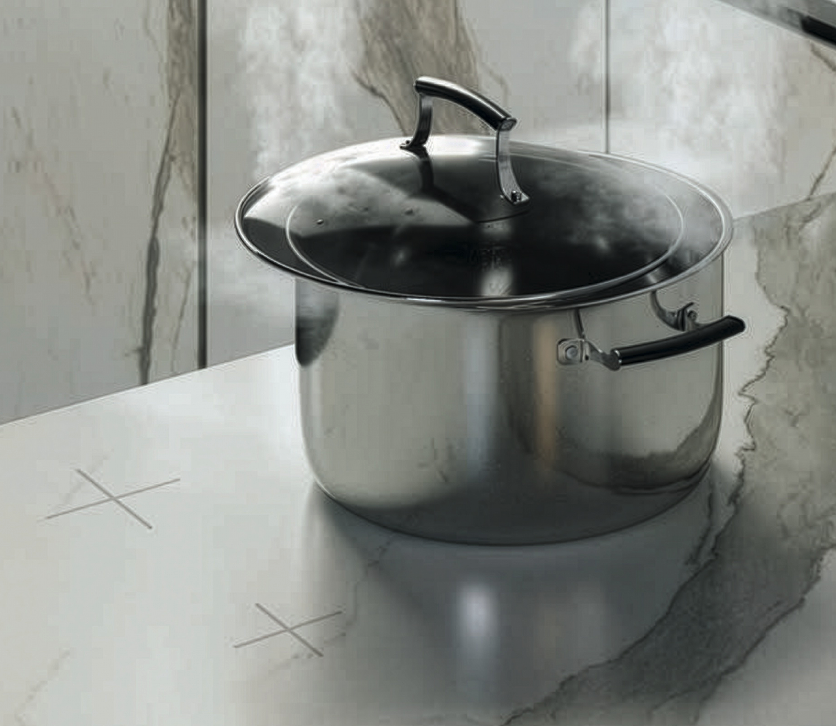
How should kitchen worktops, bathroom furnishings and furniture surfaces be cleaned?
As with normal flooring: use neutral detergents and damp cloths, and completely avoid corrosive products containing hydrofluoric acid.
-
Which detergents should be used for routine cleaning?
Use a general-purpose neutral detergent, readily available on the market, diluted in warm water (e.g. Fila Cleaner or Faber Floor Cleaner).
-
Is it possible to coordinate indoor and outdoor spaces with the same collection?
Yes. Outdoor collections such as OUT.20 ABK, X20 Flaviker and Plein Air Gardenia&Ariana bring the brands’ iconic flooring and wall-covering aesthetics into exterior settings, allowing complete visual and stylistic continuity between indoor and outdoor spaces.
-
What is 20 mm R11 thick porcelain stoneware, and when is it the right choice?
It is a ceramic range—divided into the OUT.20 ABK, X20 Flaviker and Plein Air Gardenia&Ariana collections—specifically designed for outdoor use. It offers exceptional strength, mechanical resistance and slip resistance for exterior projects.
-
In which applications can large-format slabs be used?
Large-format slabs are extremely versatile: they can be used for flooring, wall coverings and façades, as well as to create custom-made furnishing elements such as tables, washbasins, and kitchen and bathroom worktops.
-
When should I choose 6 mm, 12 mm or 20 mm?
The 6 mm thickness is ideal for floors and wall coverings, while the 12 and 20 mm thicknesses are specifically engineered for furniture applications and for creating bathroom and kitchen worktops, offering high structural strength.
-
Which sizes and thicknesses of large-format “semi-finished” slabs are available?
The range of large-format semi-finished slabs includes the 163.5 × 323 cm size, available in thicknesses of 6, 12 and 20 mm.
-
How should surfaces be protected after installation and before the site is handed over?
Glossy, satin-finished or lapped products must be carefully covered and protected during subsequent construction work. It is also necessary to wait 48–72 hours before allowing foot traffic on the floor.
-
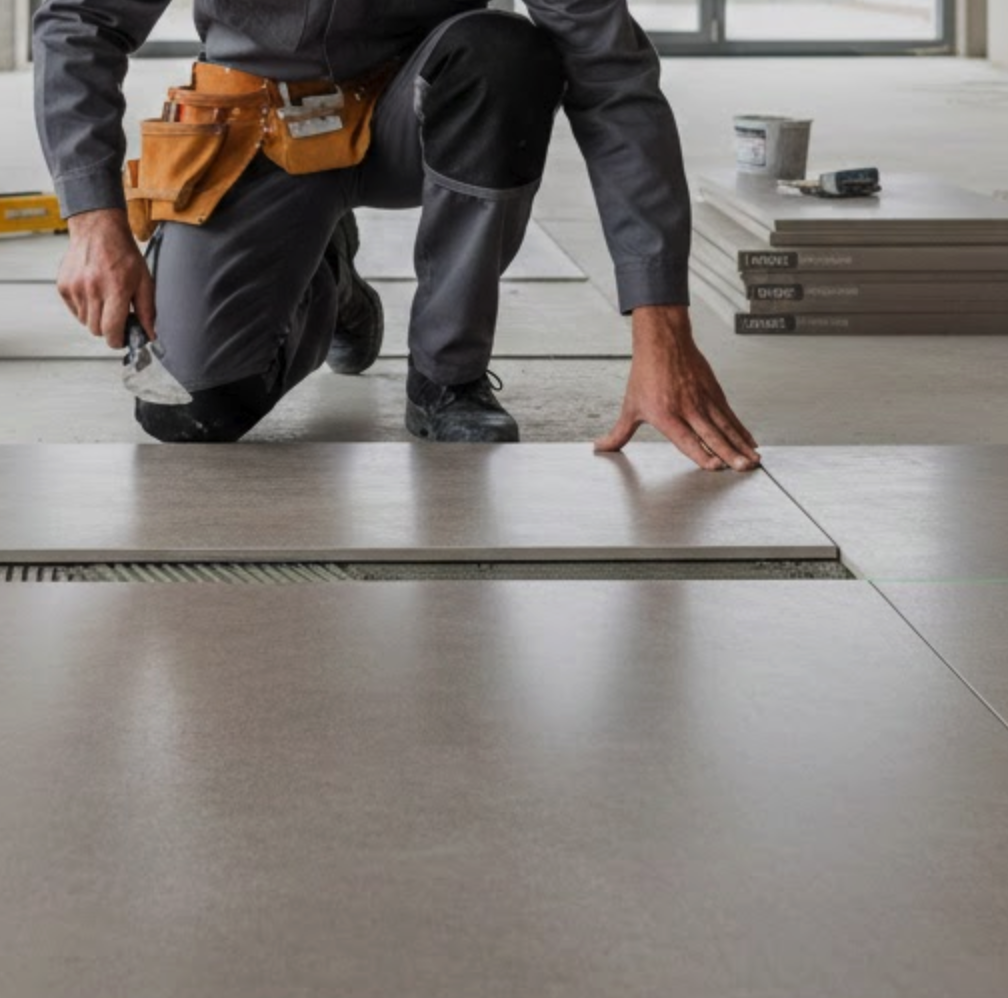
Which adhesives should be used for installation?
The use of full-bed, cement-based powder adhesives classified as C2F (E) S1/S2 is recommended. For applications on special substrates, such as large slabs on reinforced supports, use elastic or deformable adhesives.
-
Is it possible to install tiles without grout joints?
No, installation without grout joints (closed joint) is strongly discouraged, as it does not allow for the natural structural movements of the surface or any significant temperature fluctuations.