FAQ
Here are the answers to the most frequently asked questions. If you can't find what you're looking for, don't hesitate to contact us!
CATEGORIES

Slabs
-
What is porcelain stoneware and what advantages does it offer compared with other materials?
Porcelain stoneware is a compact, non-absorbent and hygienic ceramic surface. Compared with traditional materials, it is resistant to stains, bending, heat, impacts, chemicals, scratches, frost and UV rays. It is also fire-resistant and dimensionally stable.
-
Which sizes and thicknesses of large-format “semi-finished” slabs are available?
The range of large-format semi-finished slabs includes the 163.5 × 323 cm size, available in thicknesses of 6, 12 and 20 mm.
-
When should I choose 6 mm, 12 mm or 20 mm?
The 6 mm thickness is ideal for floors and wall coverings, while the 12 and 20 mm thicknesses are specifically engineered for furniture applications and for creating bathroom and kitchen worktops, offering high structural strength.
-
In which applications can large-format slabs be used?
Large-format slabs are extremely versatile: they can be used for flooring, wall coverings and façades, as well as to create custom-made furnishing elements such as tables, washbasins, and kitchen and bathroom worktops.
-
Are large-format slabs suitable for kitchen worktops and backsplashes?
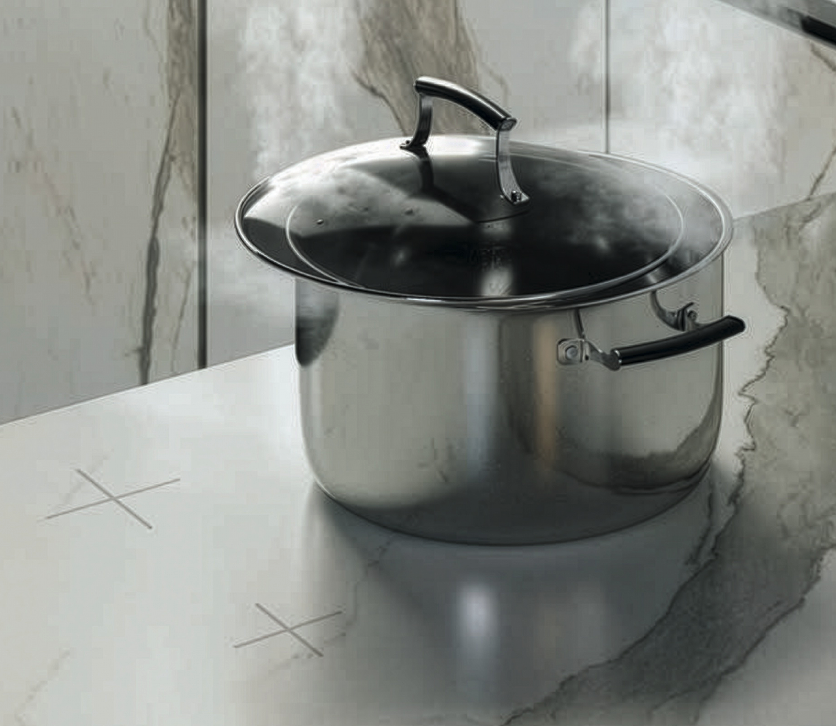
Absolutely, especially in the 12 and 20 mm thicknesses. They are highly non-absorbent, hygienic, and resistant to heat, scratches, impacts and chemical attack, making them ideal for kitchen environments.
-
Are large-format slabs suitable for bathroom worktops, washbasins, shelves and tables?
Yes. The wide range of thicknesses, combined with ease of processing such as cutting and edge finishing, makes the slabs ideal for creating custom-made furnishing elements for bathrooms and living areas.
-
Are large-format slabs resistant to scratches, impacts, heat and chemicals?
Yes, they guarantee excellent performance: they are fire-resistant, scratch-resistant, non-absorbent, and resistant to thermal shock, UV rays, deep abrasion and stains, as validated by standardized technical tests.
-
Are large-format slabs suitable for ventilated or bonded façades?
Yes, porcelain stoneware provides excellent resistance to weathering and is ideal for exterior façades.
-
Can large-format slabs be used in showers or for full-height walls?
Certainly. The material’s very low water absorption (<0.5%) and the large format make these slabs ideal for seamless shower walls, full-height wellness areas and spas.
-
What are ABK Group’s FullVein 3D and FullBody 3D technologies?
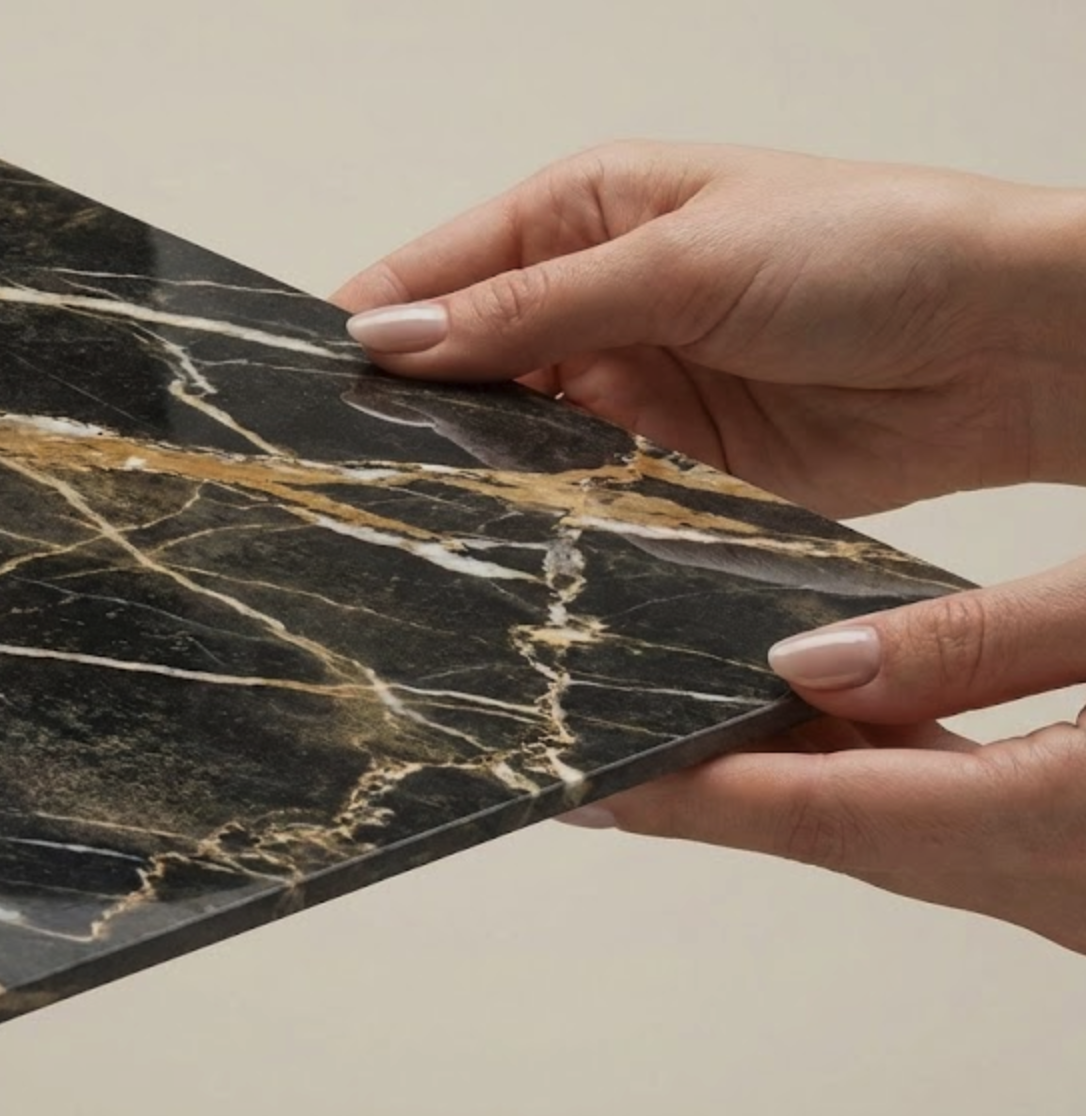
They are cutting-edge technologies that reproduce the graphics and aesthetics of natural stone, including veining, not only on the surface but also throughout the body, or thickness, of the slab, ensuring material continuity even after cutting.
-
What is the difference between FullVein 3D and FullBody 3D?
Both technologies ensure perfect material continuity throughout the body of the product. FullVein 3D specifically recreates continuous veining that runs through the thickness of marble- and stone-effect products, while FullBody 3D refers to the overall consistency of the material throughout the slab body in stone-effect products with a non-veined aesthetic.
-
What advantages do FullVein 3D and FullBody 3D offer compared with a traditional slab?
They make the visual effect of marble extremely realistic, as the details and veining remain true to nature even on visible edges exposed after cutting, drilling or milling, making them ideal for furniture applications.
-
What does “shade” mean?
Shade indicates the slight colour variations that may occur between individual production batches.
-
What does “calibre” mean?
Calibre refers to the “actual” size of the rectified product, expressed in tenths of a millimetre, compared with the “nominal” size indicated in the product description.
-
What does “first choice” mean?
“First choice” indicates that the material is first-quality and therefore free from defects.
-
What is the difference between a traditional tile and a large-format semi-finished slab?
Tiles, typically used for traditional applications, are available in sizes ranging from smaller formats up to 120 × 280 cm and are used for both indoor and outdoor floors and wall coverings. Large-format semi-finished slabs, on the other hand, measure 160 × 320 cm and are designed for project applications such as clad volumes, kitchens, worktops and other furnishing elements, as an alternative to natural stone slabs.
-
Where can I find the technical specifications of the selected finish?
All technical parameters can be found in our catalogues, technical guides and in the dedicated Download area of our website.
-
Are ceramic surfaces resistant to fire, frost and weathering?
Yes, porcelain stoneware is classified as fire-resistant (Class A1), does not release toxic substances, is frost-resistant, and withstands UV rays and weathering.
-
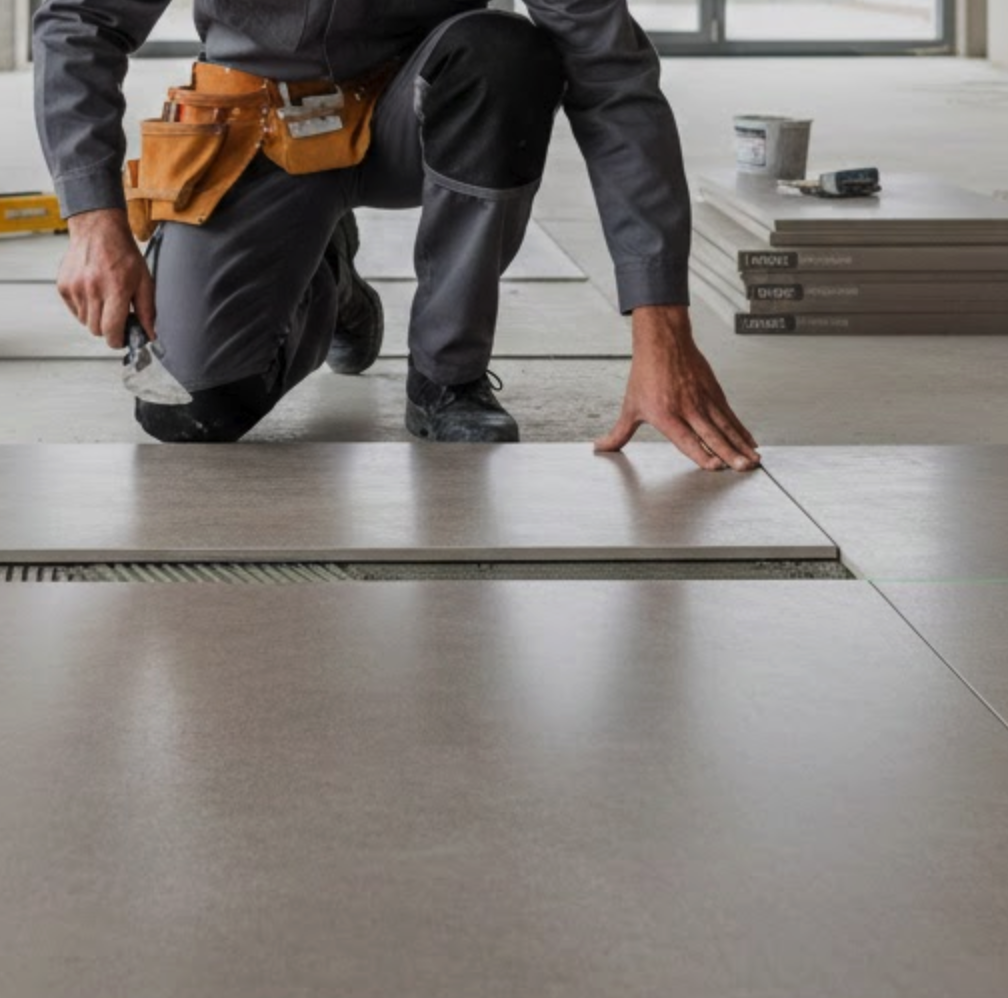
How many operators are required to handle a slab safely?
All formats larger than 100 cm require at least two installers. Depending on the thickness, handling large slabs may require between two and four properly equipped people.
-
What equipment is required for handling, cutting and drilling slabs?
Professional equipment is required, such as handling bars with suction cups or dedicated frames. For cutting, guide rails with scoring carriages, bridge saws with diamond blades for porcelain stoneware, or waterjet cutting are recommended; contouring machines can be used for holes.
-
Which suction cups or handling bars are recommended for large-format slabs?
The use of rigid handling bars fitted with suction cups and mounted on dedicated frames is recommended, as they increase the slab’s rigidity and reduce dangerous flexing during lifting.
-
How should slab packaging be transported, stored and opened correctly?
They should be transported vertically, with the edges protected from impacts. In storage, they must be kept on wooden A-frames or racks with rubber protection and secured with straps to prevent falls and deformation.
-
How should large-format slabs be cleaned after installation?
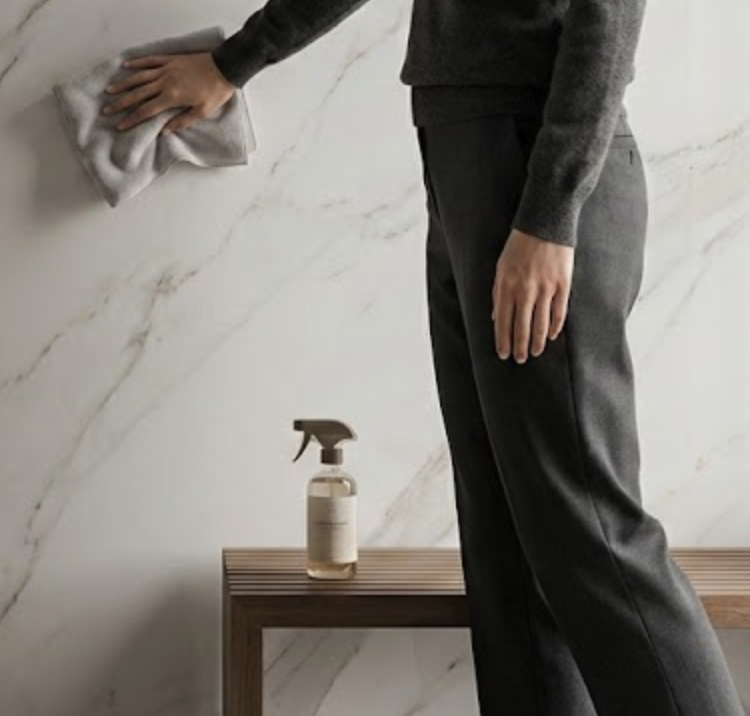
Use standard alkaline or neutral detergents (e.g. Fila Cleaner), rinsing thoroughly. It is important not to use acidic detergents containing hydrofluoric acid (HF), as it irreversibly damages all ceramic surfaces.
-
Where can I buy ABK Group products?
ABK Group distributes its products worldwide. For information about retailers, you can submit a request via the contact form on the website.